2003 – Stockholm
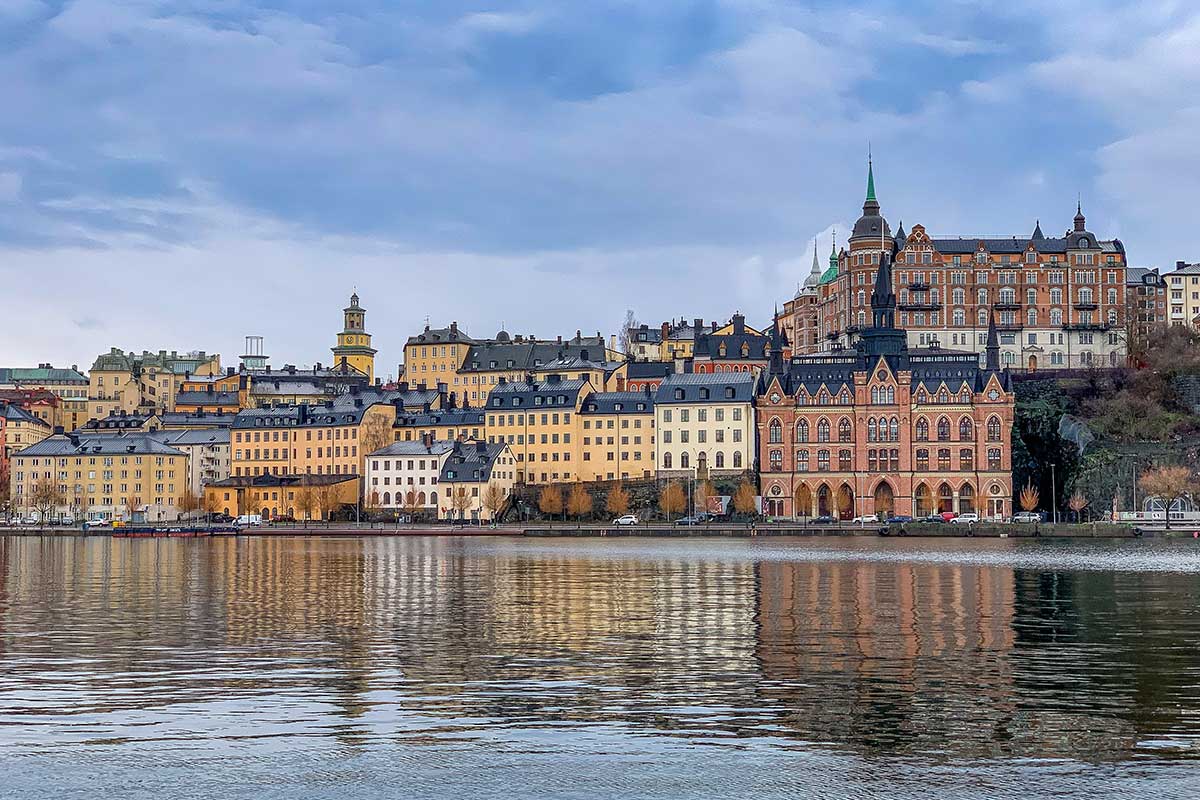
The 1st Annual Conference of EFNIL
13 – 14 October 2003, in Stockholm
At the 13–14 October 2003 representants of national institutions for language in Europe and the Scandinavian countries met in Saltsjöbaden, outside Stockholm, Sweden, to the first regular conference with the new organization European Federation of National Institutions for Language, EFNIL.
The main theme of the conference was the issue of linguistic functional domains in sectors of crucial importance such as such as culture, education, science, media, politics, labour market, trade etc. and the relation between national languages, international languages and minority languages. A second theme was language legislation.
The conference was attended by more than 30 delegates, the majority representing the EFNIL member states, that is EU-states. All EU-states were present except Ireland. In addition, there were representatives invited with an observatory status from the non-EU-states Norway and Iceland and from the Nordic Language Council.
The conference started with an opening speech by Mrs Marita Ulvskog, the Swedish minister of culture. There were 13 speeches under the main theme giving information issue of linguistic functional domains in Denmark, Germany, Greece, Finland, France, Iceland, Italy, the Netherlands, Norway, Portugal, Spain Sweden, and United Kingdom. Under the second theme, language legislation, reports were presented of the situation of Belgium, Finland, France, Italy, the Netherlands and Sweden.
As preliminaries to the discussions of the main theme a questionnaire was sent out.
After the conference a general assembly was held, during which the federation was constituted and an executive committee was elected.
Programme
10:15–10:55 Welcome and opening
10:15.10:25 Welcome by Olle Josephson, Swedish Language Council and Nordic Language Council (Swedish), and Gerhard Stickel, Chairman of the Steering committee of EFNIL (pdf | German)
10:30.10:50 Opening speech by Mrs Marita Ulvskog, Minister of Culture, Sweden (Scandinavian)
11:00–13:00 Theme 1: Linguistic functional domains, language planning and national languages, Chairman: Mrs Pirkko Nuolijärvi, Finland
Reports from member organizations in the form of short speeches, followed by questions and discussions
11:00.11:20 Johan Van Hoorde, Nederlandse Taalunie (Dutch Language Union): Functional domains, language planning . and the .white site. project (pdf | Italiano | Nederlands )
11:20.11:40 Vassiliki Dendrinou and Anastasios-Fivos Christides, Κέντρο Ελληνικής Γλώσσας/Kentro Ellinikis Glossas (Centre for Greek Language): Linguistic diversity vs national language protectionism. Language planning in action in Greece (pdf)
11:40.12:00 Pirjo Hiidenmaa and Mikael Reuter Kotimaisten kielten tutkimuskeskus/ Forskningscentralen för de inhemska språken (The Research Institute for the Languages in Finland): Language planning in Finland (English and Scandinavian) (pdf)
12:00.12:20 Niels Davidsen-Nielsen, Dansk Sprognævn (Danish Language Council): Guidelines for a Danish language policy . with special references to functional domains (Scandinavian) (pdf)
12:20.12:40 Olle Josephson, Svenska språknämnden (Swedish Language Council): Sweden on the verge of multilingual society . a new language policy (pdf | Svenska)
12:40.13:00 Francesco Sabatini, Accademia della Crusca: State linguistic policy in Italy and the role of the Academies (Italian)
13:00–14:00 Lunch
14:00–16:00 Theme 1 continued, Chairman: Mr Niels Davidsen Nielsen, Denmark
14:00.14:20 Guðrún Kvaran, Íslendsk málnefnd (Icelandic Language Council): Icelandic language policy in past, present and future (Scandinavian) (pdf)
14:20.14:40 Jan Olav Fretland, Norsk språkråd (Norwegian Language Council):Positive and negative effects of legislation and other official regulation as an instrument in the relation between the two Norwegian language forms Bokmål and Nynorsk (pdf | Norsk)
14:40.15:00 Francisco Nuno Ramos, Instituto Camões (Portugal): Portuguese Language, Strategic Language in the context of globalisation
15:00.15:20 John Simpson, Oxford English Dictionary: The English language . what happens when language policy is not explicit? (English) (pdf)
15:20.15:40 Gerhard Stickel, Institut für Deutsche Sprache (Institute of the German Language): Language policy in Germany and the lack of it (German) (pdf)
15:40.16:00 Bernard Cerquiglini, Délégation générale à la langue française (General Delegation of the French Language and the Languages of France): National languages and plurilingualism . a challenge to the expanding Europe (French)
16:00.16:10 Goytisolo, Luis, Real Academia, Española (Spain): El papel de las Academias en la política lingüística hispánica
16:10–16:30 Coffee
16:30–18:30 Theme 1 continued: Summing-up discussion, Chairman: Mr Mikael Reuter, Finland
19:30 Conference dinner at Vår Gård
Host: Ministry of Culture, Sweden, represented by State Secretary Mrs Gunilla Thorgren
8:30–10:30 Theme 2: Language legislation and national languages
Short introductory remarks from six countries (Sweden, Finland, the Netherlands, Belgium, France and Italy)
Chairmen: Mr Bernard Cerquiglini, Mr Abraham Bengio, Mr Jean-Claude Baldi, France (pdf)
10:30–11:00 Coffee
11:00–12:00 EFNIL General Assembly, Chairman: Mr Pietro Beltrami, Italy
12:00–13:00 Lunch
13:00–14:30 EFNIL General Assembly continued, Chairman: Mr Gerhard Stickel, Germany
14:30 Closing by Mr Gerhard Stickel
14:35–15:00 Coffee
Guests of honour
Swedish Minister of Culture, Mrs Marita Ulvskog
State Secretary, Swedish Ministry of Culture, Mrs Gunilla Thorgren
Member organisations
Ministère de la Communauté française (Belgium) – Mrs Martine Garsou
Service de la Langue Française (French Language Service) (Belgium) – Mr Denis Fierens
Dansk Sprognævn (Danish Language Council) – Mr Niels Davidsen-Nielsen, Mr Søren Beltoft
Kotimaisten kielten tutkimuskeskus/Forskningscentralen för de inhemska språken (Research Institute for the Languages of Finland) – Mr Mikael Reuter, Mrs Pirkko Nuolijärvi, Mrs Pirjo Hiidenmaa
Délégation Génerale à la langue française et aux langues de France (General Delegation of the French Language and the Languages of France) – Mr Jean-François Baldi, Mr Abraham Bengio, Mr Bernard Cerquiglini
Institut für Deutsche Sprache (Institute of the German Language) – Mr Gerhard Stickel, Mr Ludwig M. Eichinger
Deutsche Akademie für Sprache und Dichtung (German Academy of Language and Literature) – Mr Peter Eisenberg
Κέντρο Ελληνικής Γλώσσας / Kentro Ellinikis Glossas – Mrs Vassiliki Dendrinos, Mr Anastasios-Fivos Christidis
Accademia della Crusca (Italy) – Mr Francesco Sabatini
CNR Opera del Vocabolario Italiano (Institute of Italian Dictionary ) – Mr Pietro Beltrami
Conseil permanent de la langue luxembourgeoise (Permanent Luxembourg Language Council ) – Mr Georges Wirtgen, Mr Ralph Fichtner
Nederlandse Taalunie (Dutch Language Union) – Mr Johan Van Hoorde, Mr Sjaak Kroon, Mr Koen Jaspaert
Instituto Camões (Portugal) – Mr Francisco Ramos
Real Academia Española – Mr Luis Goytisolo
Svenska språknämnden (Swedish Language Council) – Mr Olle Josephson, Mrs Birgitta Lindgren
Oxford English Dictionary – Mr John Simpson
Observers
Nordisk språkråd (Nordic Language Council) – Mr Jan Olav Fretland
Norsk språkråd (Norwegian Language Council) – Mr Ola Haugen
Íslensk málnefnd (Icelandic Language Council) – Mrs Guðrún Kvaran
Österreich (Austria) – Richard Schrodt, Universität Wien
European Commission – Anton Van der Weij
The following organisations have answered the questionnaire: Danish Language Council (in English), Research Institute for the Languages of Finland (one in English regarding Finnish, one in Swedish regarding Swedish), Délégation génerale à la langue française et aux langues de France (in French), Institut für Deutsche Sprache (in German), Oxford English Dictionary (in English), Centre for the Greek Language (in English), Dutch Language Union (in English), Norwegian Language Council (in English) and Swedish Language Council (in English).
The answers differ a bit in size, and some are more detailed than the others. We have tried to make the summary very short in order that similarities and differences may appear as clearly as possible. We regret if someone feels that they have been misrepresented, and you can of course correct things afterwards. We add all the answers as a complement, so you can read it all for yourselves. (We have translated the Swedish answer from Finland.)
Question 1
Are there any functional domains in which the language(s) you represent have got a considerably stronger or considerably weaker position during the last decades? If so, in relation to which language have these changes taken place?
Answers to question 1
Stronger position
National language/Main language/Official language/Majority language
In the answer from Great Britain the increasing use of English all over Europe in central domains is of course noted. The membership of the European Union and the status of the national language an official language there is noted as a positive factor by Denmark, Germany and Sweden. Germany notes that German is not on the level with English or French, but that a further strengthening is to be expected as a consequence of the future member states from the middle and eastern Europe.
The Netherlands and Finland (for Finnish N.B.) report of increasing use of the national language instead of English in computer applications and the Internet. Germany and the Netherlands note the use of the national language as a second language by immigrants as a positive factor. France reports that the law of information in French to consumers have been successful.
Minority language(s)
Sweden and Germany report of a stronger position for some of its minority languages due to the ratification of the European Agreement of Regional and Minority Languages. Some strengthening regarding Welsh and Celtic/Gaelic is reported from Great Britain.
Weaker position
All countries (except Great Britain of course) report that English is taking over, or mostly already have taken over, central domains, such as the university education, especially in natural and social sciences, business life, entertainment, youth culture.
In Norway there seems to be an attitude among the leading politicians that the fact that English is taking over in lots of domains is a necessity that follows from globalisation. From Finland it is reported that many university institutions’ web sites are in English solely, and Greece that English is the language of the Internet.
Finland and Denmark reports that there is a lack of terminology or even that is dying out I some fields.
Also in secondary education English is used as reported by Sweden and the Netherlands. France reports that the government seems to have difficulties in convincing international companies of the official linguistic policy.
Finland says that the use of English does not threaten Finnish but rather the knowledge and use of other languages, such as Swedish (which is the second official language of Finland), Russian, German, and French.
Germany, that has experienced that German during the last century has lost its position of being one of the most important scientific languages, has noted as a consequence that the interest abroad of German as a foreign language has diminished. Howeve, since the reunion of Eastern and Western Germany, the interest is increasing, not only in the nearest area but also In Middle East.
The language spoken by the minority, Swedish, in bilingual Finland is reported to slowly but steadily being supplanted by the majority language Finnish or by English. Also in Norway there is the same tendency regarding the minority variant Nynorsk, however it seems to be rather safe due to strong tradition to preserve Nynorsk as a formally equal language.
From Great Britain it is reported that the globalization of English has led to that many speakers of British English feel that their language is in the process of being taken over by American English.
Question 2
Have any steps of language planning been taken in order to influence the position of one or
several languages in important domains? If so, what is the outcome?
Answers to question 2
The constitution of France settles that French is the language of the republic. There was a language law passed in august 1994. It deals with the existence of French, not its quality or contents. In France there is a multiannual plan in favour of French within the Union adopted on January 11, 2002. The public action in favour all regional languages in France has been successful.
Denmark, Norway and Sweden report of initiatives on governmental level to a language policy. In Denmark and Sweden it is not yet come to any parliamentary decisions.
In Finland the Parliament recently passed a new language act dealing with both Finnish and Swedish. This new law has in no way weakened the position of the minority language Swedish. There will soon be a new act of Saami.
In Norway there is a strict legislation since the 19th century to state the equality of the two variants bokmål and nynorsk. This has been of great importance to preserve the minority variant nynorsk.
Germany says that such plans would in fact be difficult on a governmental level in Germany, since language is regarded as a part of the culture and hence it is subject to the jurisdiction of each of the member states of the German federal republic. However, there is an increasing interest among the general public in language matters.
The situation seems to be similar in Great Britain. The responsibility for language-related issues does not reside with any particular department of state.
In the Netherlands it seems that all language planning is canalised by the Taalunie. Among other things, this organisation has put forward a proposal that the position of Dutch at the universities should be protected at the bachelor’s level. This has not led to any measures yet. It also participates in the field of Dutch as a second language for immigrants with a special action line called “social language policy”.
From Greece there are no significant steps of language planning to be reported.
Question 3
What would, in your opinion, be the most effective way to influence relations between languages in important domains? Consider e.g. education, legislation, language and terminology standardization, linguistic research, media etc.
Answers to question 3
The necessity of parallel use of national language and English is noted by Denmark, Germany and Sweden. This means, Finland says, also systematic teaching of academic or professional English.
Sweden and Norway mention legislation, and Norway adds – combined with work to influence attitudes. Finland notes that no strict legislation is necessary at the moment. Terminology work is emphasised by France and Finland, not only in the national language, as pointed out but Finland, but also in English. Development of language technology tools is mentioned by Swedish Finland, France, the Netherlands and Sweden.
Finland says that in education one should emphasize the role and deeper understanding of language, and Germany says that loyalty to one´s own language and interest in other languages must be awakened early at school. Greece recommends alternative language programmes. Finland proposes that a policy of university language education should be drafted. Support for translation and publication of high level university literature in the national language is needed.
The Netherlands and Sweden mention the teaching of more than one foreign language (i.e other than English) as an important factor. Sufficient resources for translation and good translators is necessary according to Swedish Finland.
France mentions the importance of supporting Unesco’s plans for promoting multilingualism and the access to the Internet for everyone.
The Netherlands proposes that the use of language should be allowed as a criterion for protecting the integrity of languages.
Sweden points out that is vital that language planner can prove that education in the national language is more efficient.
Norway mentions that individual examples are important, e.g. a popular football player using Nynorsk at his personal web site is of great value.
Great Britain mentions greater exposure to environment not dominated by English as a means.
Question 4
Can you propose any initiative in the arena of European language policy collaboration that should be of importance to the question of functional domains?
Answers to question 4
Denmark:
A strategy of parallel use of English and another language, or other languages, would seem to be relevant in all European countries.
Finland:
A follow-up and comparison of language skills (mother tongue + foreign languages) achieved in different educational systems (traditional language education, bilingual professional education, early language immersion, education on foreign language etc.) should be initiated. European languages should combine their efforts in the campaign for the “special letters” of the different languages, such as å, ä, ö etc.
France:
A policy of defense of the plurilingualism and promotion of the national language.
Germany:
a) More exact empirical findings over linguistic conditions in the different countries of the European Union
b) Linguistic, sociological and psychological research about the conditions between the characteristics of the individual languages and the cognitive and pragmatic functions in important domains (e.g.: to what extent does a certain language coin/shape scientific or economic recognizing and acting).
Great Britain:
Nothing at present.
Greece:
a) To collect and publish data and discuss the implications of anglo discursive practices dominating various social domains of language use
b) To investigate the not-so-obvious reasons for the weak position of many European languages in academic discourse and scientific publishing.
The Netherlands:
Setting up a scientifically based detailed database of empirical data that shows evolutions in the status, position and use of languages, in which functional domains are being distinguished.
Norway:
a) Secure the professionalism in terminology in national languages.
b) Get rid of the very formal and complicated language that you see both in EU institutions and in the national civil services.
Sweden:
a) Collect and publish data about language choice in different domains and the outcome of these choices.
b) Domain specific language resources and language technology tools such as terminology bases, multilingual dictionaries available at the Internet, translation programmes etc.
Gerhard Stickel, President
Institut für Deutsche Sprache: stickel@ids-mannheim.de
Sabine Kirchmeier-Andersen, Deputy President
Danish Language Council: sabine@dsn.dk
Tamás Váradi, General Secretary
MTA Nyelvtudományi Intézet: varadi.tamas@nytud.mta.hu
Guy Berg
Institute Grand-Ducal : Guy.BERG@ec.europa.eu
Cecilia Robustelli
Accademia della Crusca: cecilia.robustelli@unimore.it
John Simpson
Oxford English Dictionary: john.simpson@kellogg.ox.ac.uk
The Executive Committee after the election at the General Assembly in Budapest 2012:
[Photo Here]
Secretariat 2012 -2015
Tamás Váradi, General Secretary
Gabriella Kovács
phone: +36-1-321.48.30
fax: +36-1-322.92.97
e-mail: efnil@nytud.hu